Project OLIV (offline inventory project): unlocking circular value from offline rail materials
Project OLIV case study
Region, Route & Location: NW&C | West Coast South | Bibbies Yard and Camden Yard
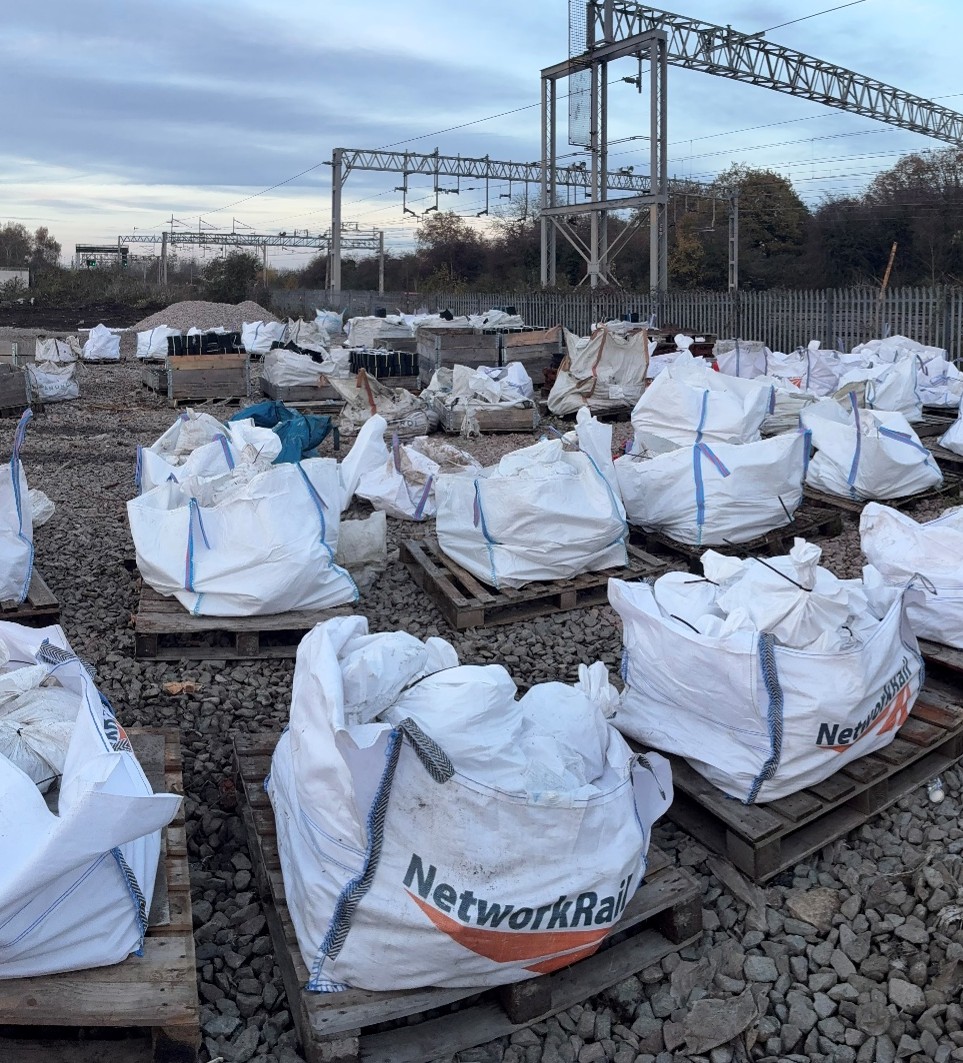
Pic: Surplus Material at an access point that has since been checked and either stored for local reuse or returned back to a Regional Distribution Centre
Who:
Project OLIV was launched across the West Coast South (WCS) route to identify, recover and reintroduce offline inventory back into the rail supply chain.
Why:
The project addresses a long-standing issue where valuable materials are stored at depots and access points but are not visible within inventory systems.
What:
The initiative focuses on recovering surplus materials, returning reusable assets to Route Services, improving project handovers and reducing unnecessary new material purchases.
Outcomes achieved:
£1.5 million offline inventory identified within the first eight periods at West Coast South (WCS) delivery depots. More than £500,000 of additional offline materials were discovered at Bibbies Yard and Camden Yard.
A new arrangement with Route Services enabled recovered Switches & Crossings (S&C) materials to be returned to Whitemoor for 60% of original value. Example: materials from Lamb Sidings achieved approximately £30,000 of recovered value compared with around £2,000 scrap value.
What were the benefits?
Circular Economy: Materials are kept in productive use for longer through reuse, redistribution and return to stock rather than disposal or scrappage.
Financial Savings: Significant value recovery from existing assets and reduced demand for new materials.
Operational resilience: Critical Switches & Crossings (S&C) assets become available at Whitemoor for emergency use when required.
Site efficiency and safety: Removal of dormant inventory reduces clutter at depots and access points, helping create safer, more organised sites.