Corporate Power Purchase (64 GWh)
Renewable Electricity – Bloy‘s Grove Case Study
Region, Route & Location: National | Route Services | Bloys Grove Solar Farm-Norfolk
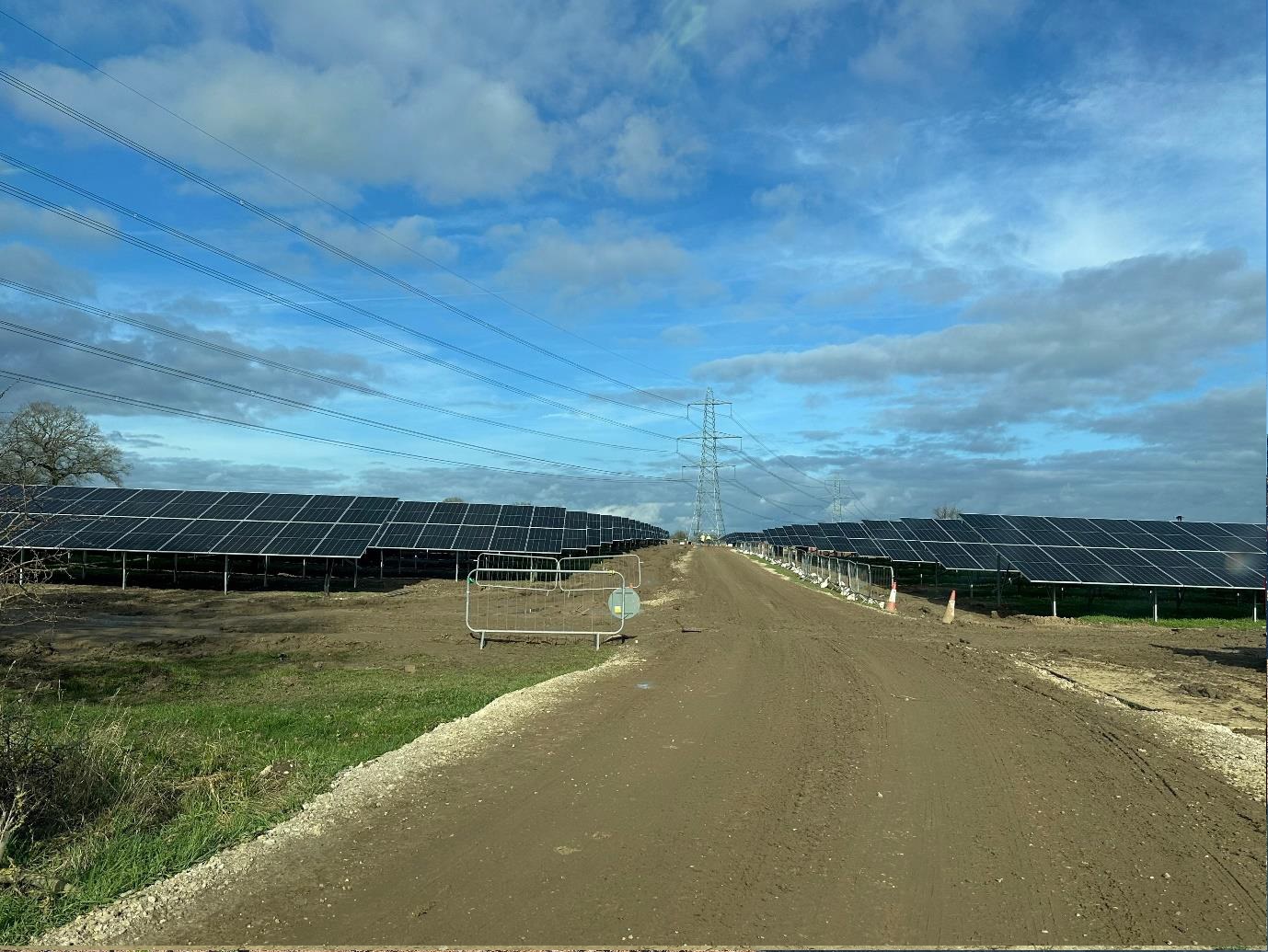
Rows of solar panels at Bloy’s Grove already in situ as part of construction
Who:
Engineering Services, Transition to Renewables (T2R), working with EDF Renewables
What:
Network Rail have signed a contract for 64GWh of renewable electricity per year to be sleeved via the grid from a new to earth solar farm. This will be used to power Network Rail offices and facilities for the next 14 years.
The deal will provide around 15% of Network Rail’s non-traction electricity consumption, with one year of electricity being equivalent to powering London Liverpool Street station for 9 years. Over the lifetime of the solar farm the emissions saving is expected to be around 60,000 tonnes of carbon dioxide, equivalent to planting approximately 2.2 million trees.
This is an innovative approach, ensuring that the electricity Network Rail uses comes from named renewable sources while securing price stability in a volatile market.
This represents the first Corporate Power Purchase Agreement of its kind within our industry.
Why: Carbon emissions must be reduced to net zero by 2050 to minimise global warming and meet legislative targets. Network Rail consumes over 1.5% of the UK’s electricity, placing it in a strong position to make a significant contribution to this target.
By ensuring that the electricity used is generated from reliable renewable sources Network Rail can significantly contribute to national decarbonisation goals.
Historically Network Rail purchased energy from a grid mix comprising of some renewables, imports and generation from nuclear, coal and gas fired power stations. Renewable power purchase agreements mean each unit of electricity used can be traced back to a named renewable source of generation.
With this project Network Rail has demonstrated a first of a kind for public sector, proving that large scale electricity usage can be transitioned into renewables, providing reliable, green, stable electricity to the railways and setting the direction for future transition.
What were the benefits?
Supports the Greener Railway strategy:
Cutting carbon so that the railway will be net zero emissions by 2045 in Scotland and by 2050 in the rest of Britain.
Supports public value for money:
Greater cost stability for electricity, mitigating exposure to market volatility
Supports Local Communities
As part of the contract, EDFR have committed to a community benefit fund of £20,000 per year over the lifetime of the solar farm, supporting the local community and delivering wider social value.
Anticipated benefits of the procurement to passengers and freight users
The project will deliver tangible benefits to passengers and freight users by enabling a more reliable, lower‑cost and environmentally sustainable railway. By securing long‑term renewable electricity at fixed, below‑wholesale prices, the scheme strengthens affordability, resilience and confidence in rail as a modern transport system.
Renewable power secured for a 14‑year period will benefit users in multiple ways:
- Enhanced environmental credibility: Sourcing electricity from clearly identifiable renewable generation provides assurance that rail journeys are genuinely low‑carbon, strengthening customer confidence and supporting modal shift from more carbon‑intensive transport.
- Greater cost stability and value: Fixing energy costs over the long term reduces exposure to wholesale market volatility, helping to manage operating costs and support more efficient, affordable rail services for passengers and freight customers.