Delivering climate adaptation
Adapting to a Changing Climate
Adapting to climate change is one of the key priority areas in our Greener Railway Strategy.
Our objective is to have ‘a well-adapted railway system that is flexible, reliable, operates safely and is responsive to a changing climate’.
Six areas that are helping us integrate weather and climate risk into business as usual across the railway, improving our operational response and long-term planning are:
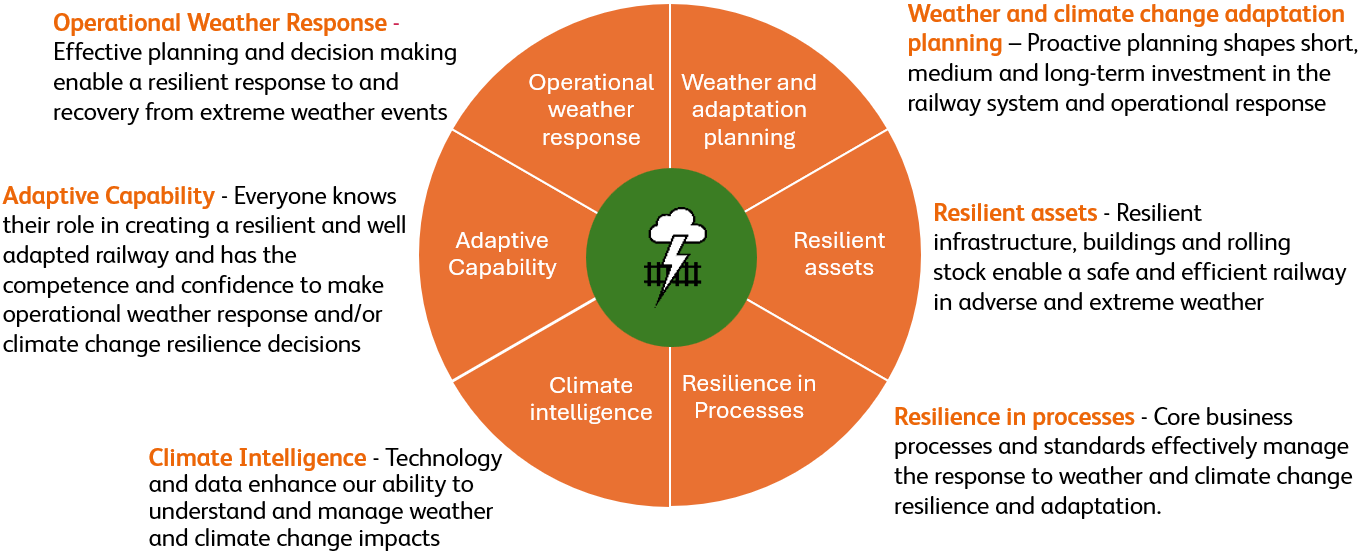
Adaptation Planning
Proactive planning will shape investment by identifying areas where we can transform the railway for the future. By developing long-term strategies, we can support flexible decision-making; benefit from partnership opportunities; and make sure the right interventions are made at the right time.
Our national Adaptation Report (ARP) and Regional WRCCA Plans outline our detailed action plans for building a climate resilient railway. Our flagship programme listed in all these plans is the development of Climate Change Adaptation Pathway strategies for the railway which we have committed to delivering for priority locations by March 2029.
Adaptation Pathways
The adaptation pathways approach helps to identify the most appropriate risk management options for a particular area. It also helps to determine where and when we need to intervene to maintain a resilient rail network.
We have produced guidance for all regions to support delivery of adaptation pathways projects and to set a consistent approach across our network.
You can find the Adaptation Pathways Methodology Guidance note on the Guidance notes page.
If you would like to participate in the development of our adaptation pathways work, please get in touch with details of the area you are interested in and we will connect you with the relevant Regional WRCCA Lead.
Resilience in processes
By embedding weather and climate change into our core business processes and standards, we make it ‘business as usual’. This helps to gradually build resilience and adapt to a changing climate with everything we do.
We are integrating climate change risk management into a range of policies, standards, and processes including asset maintenance, design and operations standards; and our strategic planning and business planning processes.
All capital delivery projects (e.g. renewals and enhancements going through the railway project development process) are required to assess the risks and impacts from extreme weather and climate change, and develop options that are resilient to these impacts for project/asset planning and design. See NR/L2/ENV/015 Sustainability Minimum Requirements for Projects – Design and Construction and ‘I need to complete a climate change impact assessment’.
Resilient assets
We want to proactively invest in projects and asset renewals which enhance the resilience of operations and assets. This brings safety, performance, and wider sustainability benefits (e.g. nature-based resilience solutions could also enhance biodiversity and reduce carbon).
Case studies of projects that are helping us build resilient assets are available in our Adaptation Report and Regional WRCCA Plans.
Adaptive Capability
We want everyone to understand their role in creating a resilient, well-adapted railway. This improves our understanding and gives people the ability and confidence to make informed operational weather response and climate change adaptation decisions.
Some of our activities include:
- Capacity building and communications to support understanding of adaptation across business
- Expanding our Weather Academy to include training courses on climate change
- Annual completion of the Rail Industry Climate Change Adaptation Maturity Assessment and implementation of actions to improve our scores.
Climate Intelligence
We want to base decisions on the latest data and a mature understanding of assets and lessons learnt from operational experience. We have a wide range of projects aimed at helping us better understand and manage the effects of weather and climate change, using our asset knowledge and operational experience to deliver a safe and reliable railway.
Some of our current activities include:
- Enhancing vulnerability and criticality mapping and visualising climate risk
- Developing a flood and coastal risk management framework
- Updating and improving access to climate change projection data
- Developing a digital tool to support our adaptation pathways programme
- Embedding climate change in analysis and modelling processes
We are collaborating with several external research groups and projects, which include:
- Work with RSSB and the Department for Transport on a range of projects
- DARe – Decarbonised, adaptable, climate resilient transport hub
- Transport Research and Innovation Board
- RERA Resilient Railways – UIC (The worldwide railway organisation)
Operational Weather Response
We use the best available information and decision-making to help us prepare for, respond to and recover from extreme weather events. This allows us to run trains while keeping our workforce and passengers safe, keeping costs low and reducing risk.
Multiple teams and business units across Network Rail and the wider rail industry are responsible for the delivery of a safe and reliable service in extreme weather and changing seasons. Further information on responding to weather impacts on the railway is available on the Network Rail website.
The Weather Risk Task Force was established following the tragic accident at Stonehaven/Carmont in Scotland in 2020. Two independent reports were commissioned looking at how we manage our earthworks and drainage assets (by Lord Robert Mair) and the availability/use of weather-related information (Dame Julia Slingo). The recommendations from these reports and the Rail Accident Investigation Board investigation are delivered through a programme of work across Network Rail led by the Weather Risk Taskforce. The programme is also implementing some of the recommendations from the Extreme Heat Taskforce set up after the very hot weather in July 2022.